
How to choose tin cans for wet pet food.
Wet cat and dog food is one of the most demanding products to can. This guide walks through the decisions that matter — recipe, can, lacquer, end and filling — before you request a quote.
Why wet pet food is packed in tin cans
Wet pet food is high in protein, fat and moisture, and it is sterilised inside the pack. A steel can withstands the temperature and pressure of retort, blocks light and oxygen completely, and gives a long ambient shelf life.
Cans also stack and ship efficiently, run at high speed on filling lines, and are permanently recyclable — which matters to retailers and brand owners alike.
Start with the recipe type
Pâté and loaf
A dense, solid pack filled hot or cold. It needs a full-aperture easy-open end so the product releases cleanly, and a lacquer that lets it slide out.
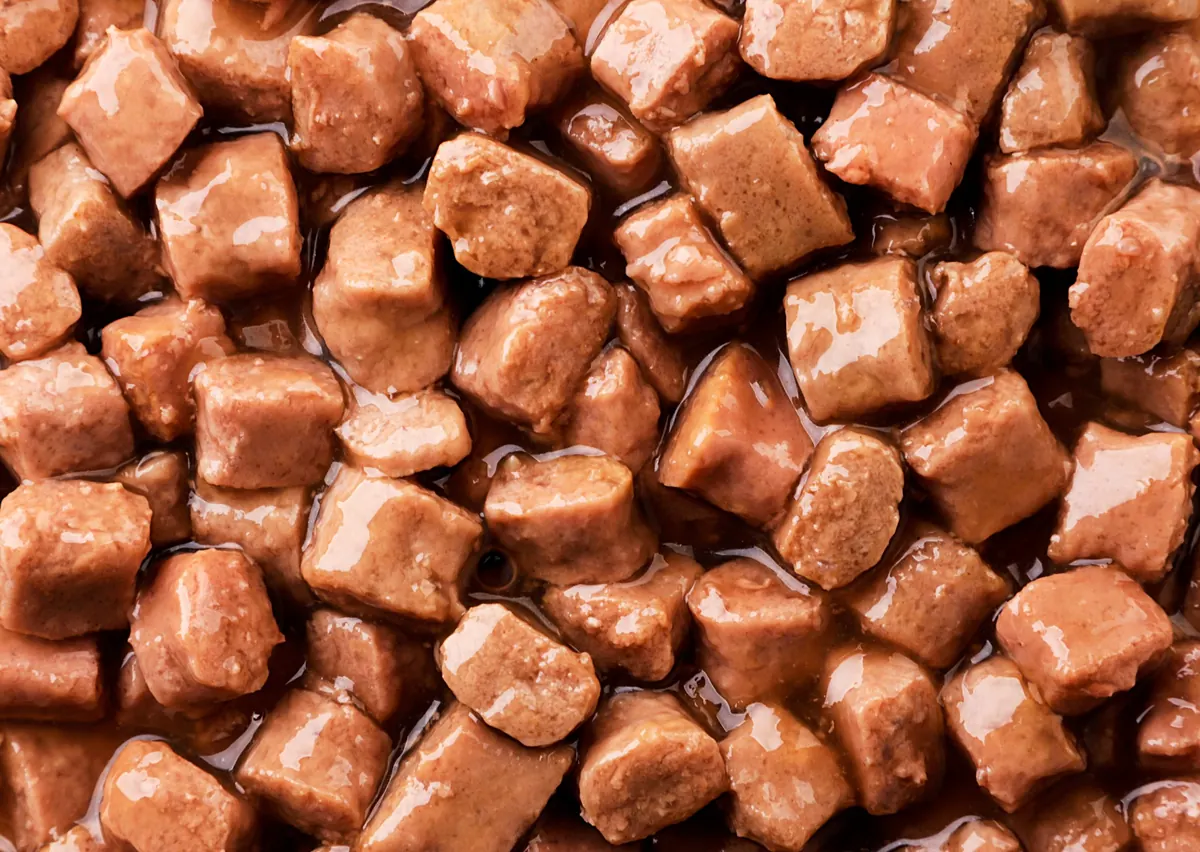
Chunks in gravy
Pieces in a thickened sauce. Headspace and fill temperature matter for vacuum; the sauce chemistry influences lacquer choice.
Chunks in jelly
Similar to gravy recipes, with gelling agents that set after retort. Consistent fill weight and headspace keep the vacuum stable.
Fish-based recipes
Often higher in sulphur-bearing proteins and salt, which makes sulphur-resistant internal lacquer especially important.
Five technical decisions
Format and fill weight
Choose diameter and height for your portion size and line. Tell us the target net weight and we review the format with you.
Internal lacquer
Protein-rich recipes release sulphur compounds during retort that can stain bare tinplate. A sulphur-resistant lacquer system suited to the recipe prevents this.
Retort resistance
Body thickness, beads and coating are matched to your sterilisation cycle so the can keeps its shape and the lacquer stays intact.
Easy-open end
The end is matched for a reliable, comfortable opening force and for compatibility with your seamer tooling.
Double-seam control
The bottom seam is controlled in our plant; we share the seam dimensions so your top-end seam can be set to match.
Can filling and seaming: what to check on your line
Headspace
Leave consistent headspace for vacuum formation. Too little risks seam stress and bulging in retort; too much reduces vacuum and fill weight.
Fill temperature
Fill temperature influences the vacuum after cooling. Keep it stable from can to can.
Clean flange
Product on the flange is a common cause of seam leaks. Fillers should leave the flange clean before the end is applied.
Seam checks
Measure seam thickness, height, overlap and tightness at start-up and at regular intervals, by teardown or seam imaging.
Retort handling
Avoid impact on warm seams and control cooling-water quality; wet, warm seams are at their most sensitive.
Storage
Store empty cans and ends dry and cool, away from direct sunlight, and use them in rotation.
General guidance. Process parameters must always be validated for your own product, equipment and legal requirements.
What to send for a pet food can quote
To quote quickly we need: the recipe type (pâté, chunks in gravy or jelly), target net weight or can size, annual quantity, your sterilisation process, the destination country or port, and whether you need printed or plain cans.
ERICAN supplies cans fill-ready with their easy-open ends from Salihli, Manisa (Turkey). See wet pet food cans for the issues we most often help solve, and export supply for shipping.
Frequently asked questions
Are tin cans safe for pet food?
Yes. Pet food cans use food-contact lacquers and are sterilised after sealing. ERICAN manufactures in line with EU food-contact legislation, including (EC) 1935/2004 and (EC) 2023/2006.
Why does pet food sometimes leave dark marks inside a can?
This is sulphur staining: sulphur compounds released from protein during retort react with the metal. It is prevented by choosing a sulphur-resistant internal lacquer for the recipe.
Do your pet food cans have easy-open ends?
Yes. Our cylindrical cans are delivered with easy-open ends, which the consumer opens without a tool.
Are pet food cans BPA free?
For food-contact coatings ERICAN favours BPA-non-intent (BPA-NI) lacquer systems. The lacquer is selected according to your recipe.
Do you export pet food cans?
Yes. We export from Turkey and quote per project for buyers in the Middle East, the Gulf, North Africa, Europe and neighbouring regions.
Related: Wet pet food cans · Tin cans explained · Three-piece vs two-piece cans · Quality & compliance